2025 was not kind to the video game industry. Layoffs since 2022 have now surpassed 40,000, and the labor market has driven amazing talent away from our medium. There are some hard truths we’ll need to face about the year we just closed and the one ahead, but we’re not without hope.
The industry is changing. The gap between AAA and Indie has been vast since the Indie Renaissance began in 2012. But now, we are heading down paths that may no longer be leading to the same destination.
The AI bubble continues to expand, but as we predicted last year, the promises are not being fulfilled. Instead, we see an increasing reliance on technology that relies on theft and devalues the human spirit’s necessity in the creative process.
Worse still, our world is becoming even more obscured, more opaque. As we see more companies headed toward consolidation or privatization, our access to vital information that powers trend analysis is getting cut off.
For those that are paying attention to these trends, hope does spring. There is opportunity in the spaces AAA is leaving behind. There is a growing hunger for shorter games made with reasonable budgets by human beings who care more about their craft than fad technology. There is a place for these stories to be told, and an audience waiting to experience them.
All is not lost, but the world around us is changing faster than ever before. (And if you’re curious how our predictions for 2025 shook out, you can read last year’s piece here.)
Looking Back at 2025

Labor Stories Dominated in the Post-Consolidation Industry
If you’ve listened to the podcast over the last three years, you’ve heard the same sentence spoken just before the labor report fairly consistently: “The labor report is very hard this week.”
We both kept waiting for this to not be the case, for labor to finally be back on track to place where we only could celebrate wins — steps towards unionization (or full unionization itself), studios buying back their IP and staying open, studios raising money to keep their devs working — but in a post-consolidation game industry, most of what we’ve reported on has been a series of small nightmares.
According to Raj Patel’s game industry layoff tracker, 2025 had the highest number of layoff waves of any of the preceding years tracked. 33% of the 221 layoff waves that occurred last year were reported without headcount of developers affected. So while we know that nearly 6,000 people lost their game development jobs in 2025, there are likely thousands more developers on top of that whose studios didn’t report how many people were affected by said layoff wave (or studio closure).
Despite how bleak it is, even despite the fact that 2025 had fewer cumulative layoffs (by far) than 2024, labor still asserted itself against corporate greed, generative AI, and anti-labor practices being enacted all over the world. We saw more game developer unions pop up in the United States in 2025 than any prior years. Under Microsoft’s (now lapsed) labor neutrality agreement under the Activision-Blizzard acquisition, more unions popped up under the software giant than anywhere else in the United States’ game industry.
The United Video Games Workers under the Communication Workers of America debuted its organization at GDC 2025, marching through the Yerba Buena Gardens and shouting a rallying cry that labor isn’t powerless, that there are more game developers than shady executives. It was a glorious moment of solidarity among each developer in the gardens that day. Manda is a paying member of the UVW-CWA (which operates as a North American union, not just in the United States), until such time as she will start making hiring decisions, which will preclude her membership in, but not her support of, the organization itself.
Indie game developers and studio owners are looking far more warily at the funding landscape as a result of mass consolidation and the ensuing rapid decline that led to mass layoffs all over the world. Many studio owners won’t accept private equity funding or the potential of being purchased by a larger corporation. After the monumental damage done by The Embracer Group’s buying spree, followed by wave after wave of studio closures and layoffs, there’s reason to give serious pause to large investment (or potential acquisition) deals.
Our rallying cry, for the last couple of years at the very least, has been that if we don’t stand together, we fall alone. Together, we’re strong and we can do anything. And in 2025, labor started to prove that out. Let’s keep going.
AAA Executives Finally Got Knocked Off The Live Service Bandwagon (A Little)

Just four short years ago, while the world was beginning to come out of the COVID-19 lockdown, the gaming industry was gorging itself at the live service buffet. If you listened to triple-A executives, single player games no longer made money, live service was the only viable option, and bleeding every dollar from players was the path to success.
There are dozens of quotes we could share about this from the executive funny farm, but the one that sticks in our minds is former Sony Interactive Entertainment President Jim Ryan’s bold statement about the company’s decision to purchase Bungie that year.
“In terms of deployment of Sony’s capital, when you look at 69 billion dollars for Activision compared to 3.6 billion dollars for Bungie, we believe that Bungie can give us way more than a 69 billion acquisition of Activision,” Ryan said during the federal approval hearings for the Microsoft / Activision deal. “And that’s before considering the relative value of that particular transaction.”
Ryan bet big on Bungie and Sony’s in-development live service portfolio. Since then, many of those games have been canceled, Bungie is struggling to keep players interested in Destiny 2, Marathon has been burdened by an art theft scandal, and Sony didn’t even know what it had with Helldivers 2 until the game was already out in the market. Bungie was supposed to serve as advisor to all of Sony’s live service titles. Now, the studio is an anchor weighing down the rest of the first-party studios.
The purpose of this isn’t to shame Jim Ryan (that’s just a bonus), because he wasn’t alone. This was the steady drum beat of every triple-A earnings call. Every executive wanted every release to be a “forever game.” Of course this was foolish. With the exception of annualized franchises like sports titles, players weren’t moving onto new games.
Live service games and their FOMO-ridden microtransactions, grindy battle passes, and disappearing content have become quicksand. The more players struggle (or in this metaphor, spend time and money) the more games hold them in place. What was intended as a way to smooth out cash flow and keep players within a single publisher’s ecosystem backfired. Now, players weren’t just staying away from competitors’ titles, but their own newer releases.
Oops.
Thankfully, we’re starting to see things turn around a bit. Single player games never went away. Indie devs have been making them all along. But now triple-A publishers have discovered that balance is important. Hopefully, they’ll take from this a valuable lesson: don’t put all your eggs in one basket.
<Stares in AI slop>
At least one executive seems to have learned the lesson, though. In its Q2 FY2026 earnings report (covering July through September 2025), Sony CFO Lin Tao had some blistering words about the Bungie acquisition.
“Regarding Destiny 2, partially due to the changes in the competitive environment, the level of sales and user engagement have not reached the expectations we had at the time of the acquisition of Bungie,” Tao said. “While we will continue to make improvements, we downwardly revised the business projection for the time being, and recorded an impairment loss against a portion of the assets at Bungie.”
An impairment charge effectively brings the book value of an asset in line with its market value. In this case, Sony took a ¥31.5B ($202.8M) hit because of Bungie’s stumbles both for its own games and because of its failure to positively support Sony’s live service projects in development.
Put another way, Sony says that Bungie is worth at least $202.8M less than it was at the time of acquisition.
In October 2024, Midia Research’s Rhys Elliot put it succinctly. “Several single-player studios were pushed into making live-service games – the trend chasing did NOT pay off.”
Crystal Dynamics’ Marvel’s Avengers, Rocksteady’s Kill the Justice League, Creative Assembly’s canceled Hyenas, Arkane’s Redfall, BioWare’s Anthem, and Naughty Dog’s canceled The Last of Us online game are just a handful of titles that flopped because executives wanted every game to drain our wallets slowly over time. They forced studios to work outside their zone of genius, and the results clearly exhibited a simple truth: forcing teams to chase trends outside their skill set delivers exactly the tepid results you’d expect.
On top of that, executives forgot one simple thing. Even when disposable income runs free (not right now, of course, as we suffer a horrific economy), time is forever finite. Most people don’t have time for more than one or two live service games. Switching costs have skyrocketed, making players slow to transition to new, unproven games. Triple-A publishers have given players every reason to stay far away from titles that get bad marks from critics and consumers.
Frankly, we’re not confident that executives have truly learned their lesson. Instead, the focus has shifted to the AI bubble. And when that pops? Even more people will lose their jobs and execs will keep their bonuses.
The industry needs to kick its habit of assuming that triple-A executives know what they’re doing. They’ve led us all astray. It’s too late for them. It’s not too late for the rest of us.
Indies Stole the Show
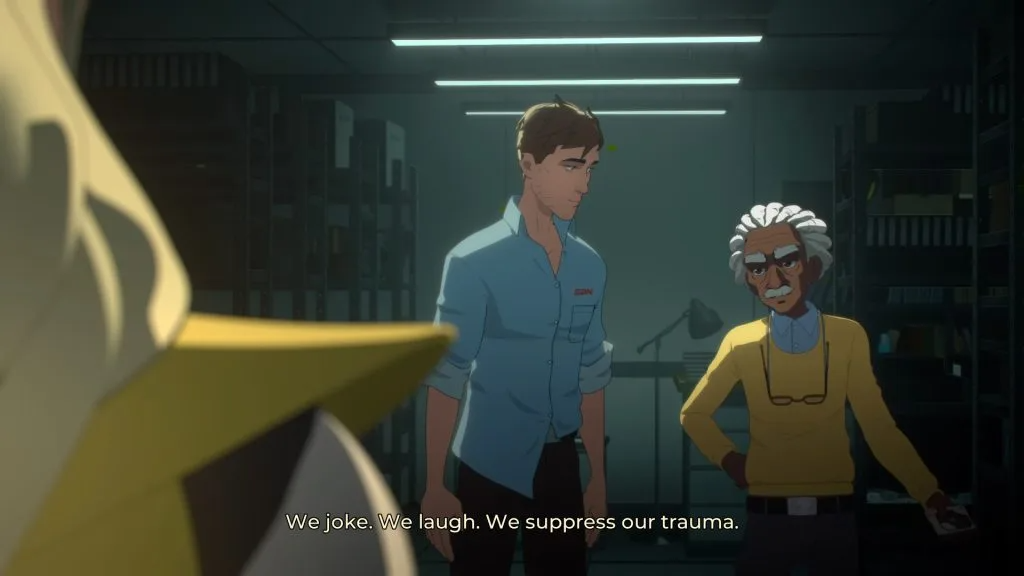
While triple-A was flailing around and trying to figure out how to squeeze you for even more money, indies were out here doing what they do best.
2025 saw yet another GTA 6 delay, maligned ports of both The Elder Scrolls IV: Oblivion and Fallout 4, the worst received Call of Duty game possibly ever, miserable PC performance for Monster Hunter Wilds (after two stellar releases in World and Rise), fan backlash to Civilization VII, and even more high profile failures.
That’s not to say that there weren’t any good triple-A titles (Ghost of Yotei, Battlefield 6, Elden Ring: Nightreign, and most of Nintendo’s new releases are a few of them). It’s just that indies are offering more interesting, more diverse, more enjoyable experiences… and players are starting to migrate their play time.
Last year delivered some truly huge indie sensations. Whether you’re a puzzle fiend and lost hours to Blue Prince, enjoy the engaging fantasy of Eternal Strands, love the dysfunctional superhero drama of Dispatch, or prefer to quest with family and friends in Sunderfolk (seriously, please play Sunderfolk), indies had something for most players in 2025.
(And before you get mad at its exclusion from the list above, we did enjoy Clair Obscur: Expedition 33, also.)
We’re eager to see how the awards shows that matter (D.I.C.E. and GDC) play out. With some huge nominations for indie games, including Julián Cordero and Sebastian Valbuena’s Despelote, Hexecutable’s Consume Me, Guard Crush Games’ Absolum, AdHoc Studio’s Dispatch, Dogubomb’s Blue Prince, and a bunch more, we’d love to see triple-A take a back seat to some of the amazing creativity coming out of small studios.
Maybe then we’ll see funding start to flow to the studios who already make the most of every dollar. But we’re not done talking about this. We have more to say about the widening gap between triple-A and indie as we look ahead to what 2026 has in store.
The Hypocrisy of AAA Was Writ Large

There has always been enormous cognitive dissonance in the video game industry. How could we, as an industry, both prioritize diversity at the same time we enable communities of toxic, racist, and misogynist players?
In an industry afraid of firing its most destructive players, how can we believe that large publishers are serious about their efforts to give voice to developers from a wider range of backgrounds and experiences?
Well, we’re sad to say that your cognitive dissonance is over. You no longer have to wonder how these large companies can hold both of these positions at the same time. The answer is now clear: they don’t really care about diversity and inclusion. It was convenient PR. It may have been real at one point, but look at every company that has shuttered their DEI initiatives and you’ll see the diversity-washing for what it really is.
Take-Two has removed DEI from its annual report to shareholders, swapping it for “diversity of thought.”
The Game Awards made a lot of promises to its Future Class, which was established to recognize those “who represent the bright, bold and inclusive future of video games.” It began in 2020, inducted its final class in 2023, and wiped all mention of the program in 2025 after failing to deliver anything of value. Worse, inductees report that they were asked to perform free labor instead of receiving the mentorship they were promised.
Ubisoft… well… what can you say about a company that had a five-year plan to improve its working conditions and enhance diversity while failing to make even a small effort at either according to employees? Well, I guess you can say that they’re also union busting with the closure of their Halifax studio… but that isn’t really a mark in the win column, is it?
These are just a few examples of mounting evidence that the biggest players in the industry leaned into DEI to capitalize on Black Lives Matter protests in 2020. They also leveraged these initiatives as set dressing, trying to convince the world they were truly reforming after the Me Too movement grew in our field.
But when inclusion staff and programming is on the chopping block first, the mask slips off and we see the cold hard calculations under the hood. It’s a hard realization that the investment was driven by PR rather than a true change in perspective, but we see it now.
Eventually, the political landscape will improve. Marginalized people will no longer need to be afraid of power structures designed to keep them down. Their existence won’t be a political football anymore. And when that time comes, we won’t forget who lived their values and who cashed them in for a pat on the head from fascists.
Don’t Call it “Friendslop”
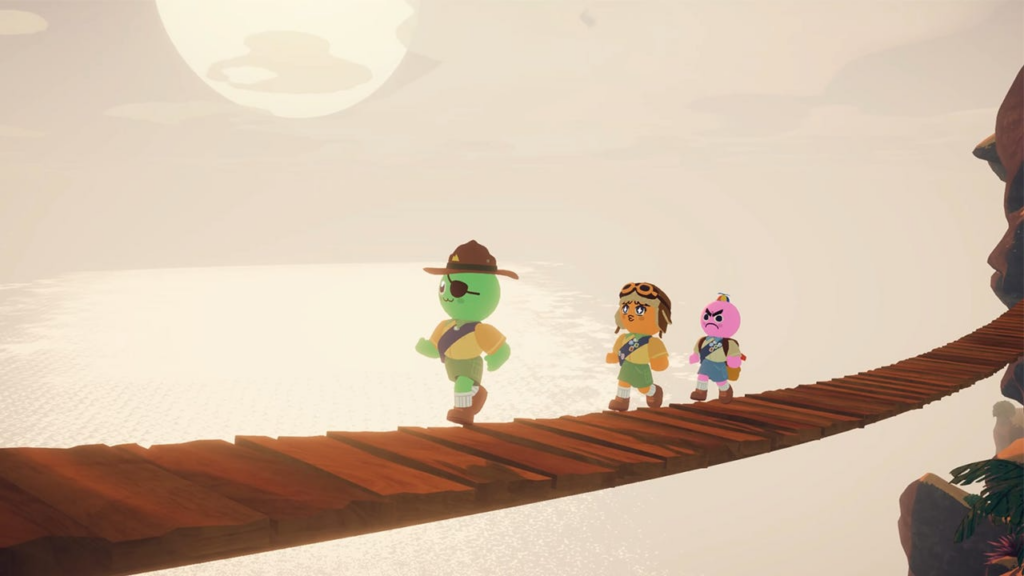
The first time that we saw the term “friendslop”, Manda nearly flipped a table. Well. She nearly flipped a table in her mind, at least.
While “friendslop” may have been a convenient way to talk about simple (dare we say elegant) multiplayer games with incredibly focused gameplay loops, usually made for very little money, it felt like it became a pejorative for how an entire generation of players engages in gaming.
Younger Gen-Z and the eldest of the Gen-Alpha players don’t tend to play games the way that the preceding generations did. They, much like our own 14-year-old son, have a tendency to focus on one game at a time with smaller multiplayer games to fuel their third spaces. And “friendslop” filled a joyful gap that gaming had been missing: weird little multiplayer games that have the potential to create memories with family and friends in the way that couch co-op did for us in the ‘90s and 2000s.
Games like PEAK, RV There Yet?, and even spookier experiences like R.E.P.O. or Lethal Company have been funnelled into this strange pejorative term. It feels as though because these games are focused on silly (albeit sometimes janky) gameplay loops that prioritize laughter and bonding over anything else… that somehow, they’re lesser. But really, these games are just as important for building up a young player’s gaming skills as playing a more serious game like Silksong is.
These games have proven to be connective, community-focused (and driven), and deeply creative. For our family, these are the games we turn to when we need to laugh uproariously while spending time together. Manda’s dad and brother often join us and our youngest children for these moments, pained abdominal muscles from fits of laughter and all. You haven’t lived until you’ve seen your youngest child light up a cigarette and pound a six pack of brewskis in RV There Yet? with no real seriousness at all.
The suffix of “slop” is the real issue here. There’s nothing sloppy about these games. They’re intentionally simple (therefore elegant, by our reckoning), intentionally small, and intentionally peppered with gameplay elements to encourage not taking a damn thing seriously. The way that we see it, “friendslop” misses the point of why these games took over the collective consciousness of 2025.
Instead, we’d like to propose that we embrace the jank and remove the slop. No more “friendslop”. Long live “palware”! (Okay, it’s a work in progress; tell us what you think the alternative to “friendslop” should be.)A Battle for the Creative Soul of Our Industry
Looking Ahead to 2026

Private Equity and More Consolidation Threaten an Already Shaky Foundation
We wish we could tell you that things are going to be better in 2026. With more than 40,000 jobs lost since 2022, inflation and higher interest rates drying up funding, the growth of fad tech like LLMs steering nearly every major company into a ditch, and the shockwaves of consolidation during the early part of the decade, things are not poised for improvement.
We’ve been keeping a close eye on global investments in the video game industry. We’ve seen the waxing and now waning of Chinese investment in the west. Saudi Arabia has been working overtime to improve its image by investing a large portion of its $941 billion public investment fund in video game companies, including Scopely (Monopoly Go), SNK (Fatal Fury), Nintendo, Take-Two, Activision Blizzard (pre-Microsoft acquisition), Capcom, Nexon, Embracer Group, and direct and indirect investments in major esports events like the EVO fighting game tournament.
Now, we’re facing down two huge shifts that will forever change the industry.
EA will likely close a $55 billion leveraged buyout (the largest in history), with Saudi Arabia set to control 93.4% of the Madden maker. The remaining 6.6% will be controlled by Donald Trump’s son-in-law, Jared Kushner’s Affinity Partners (funded by Saudi Arabia) and Silver Lake. Did Saudi Arabia need Kushner? Well, yes… but not for his money. His participation assures that the Trump kleptocracy will not stand in the way of the deal.
$20 billion of the deal will be financed by debt, with EA itself as the collateral. JP Morgan Chase, which managed the deal will sell off the debt in leveraged loan and high-yield bond markets. If EA can’t service the debt, everyone is going to take a hit. If you bank with a large institution, chances are, you’re going to get wrapped up in this whether you like it or not.
There are reasonable concerns about what the buyout will mean for EA’s portfolio and its employees. Specifically, fans of The Sims, a series which has traditionally been extremely queer-friendly, are concerned that Saudi Arabia’s oppressive and socially backward regime will impose its values on EA’s games.
If the EA leveraged buyout news wasn’t bad enough (and boy is it bad), Warner Bros. is in the middle of a battle between Netflix and Paramount. (Oh, yeah, there’s that whole Skydance / Paramount merger that has seen the complete destruction of CBS News at the hands of a fascist-loving sycophant.)
One way or the other, Warner Bros. is going to be under new management. Netflix is Warner Bros. Discovery’s preferred suitor. Even with the streamer taking only the Warner Bros. piece of the pie, WBD’s board of directors thinks it is the better offer for shareholders. Paramount (under new leadership from David Ellison, the son of Oracle founder Larry Ellison) disagrees.
WBD rejected their first offer. And their second. And now Paramount is both pursuing a hostile takeover and filing suit against WBD over “transparency” matters.
Let’s be clear, no matter who wins this, the gaming industry (and beyond) is going to lose. Netflix has floundered in its gaming efforts. It, like so many other large companies, swallowed up gaming studios only to shut them down or spin them off. As part of its strategy, Netflix has assigned no value to Warner Bros. Interactive Entertainment.
Mortal Kombat? Worthless!
TT Games? Who even PLAYS LEGO games anymore?
Batman? Penniless (rather than Pennyworth)!
Obviously, we’re being facetious. With a new LEGO Batman game on the way, Mortal Kombat about to hit a sales spike thanks to the upcoming film, and even (dare I say it) Harry Potter titles selling well, Netflix looks foolish for devaluing great games and the studios that make them.
As for Paramount, the fit seems like it would be better, giving WB access to even more great franchises (Spongebob Squarepants, Teenage Mutant Ninja Turtles, Star Trek, and more). However, Ellison is a supporter of the current United States government. Under his watch, he’s already turned CBS News from a pillar of journalism into a propaganda machine for the ultra-right.
It’s hard to reconcile Star Trek, the most hopeful major science fiction property out there, in the hands of someone who couldn’t begin to understand or appreciate it. The values Star Trek creator Gene Roddenberry baked into the franchise are utopian and optimistic. It dreams of a post-financial universe in which scarcity has been all but eliminated. It envisions a world where differences aren’t just celebrated, they’re necessary. Star Trek inspires us to dream of a better future, and one that isn’t out of reach if we just strive a bit harder.
David Ellison couldn’t begin to understand or appreciate Star Trek, because he is everything that Gene Roddenberry hoped we would leave behind in the darkness.
So, yes. Warner Bros. as we know it is about to change. And based on the two parties that are likely to come away with it, those changes won’t be for the better.
More private equity. More consolidation. That’s the path we’re on. And at the end of it is more job loss, more studio closures, and more values destroyed by greed.
We wish we could tell you that this year is going to be better. We hope it will be. We desperately wish that we’re proven wrong. But if that doesn’t happen. If this is, in fact, the path we’re on, we’ll only survive it together.
Tariffs and Memory Prices Will Change the Console Landscape

When Valve announced the new Steam Machines, Ars Technica’s Kyle Orland was kind enough to ask Mike for his thoughts on the device and its potential price. What he got back in return was novella-length, because Mike is always set to “verbose mode.”
At the time of the announcement, we anticipated that the Steam Machine will likely be priced at around $700 – $800 for the 512GB model and $1,000 – $1,100 for the 2TB model. That was before Micron announced it was winding down its Crucial brand and getting out of the consumer RAM business, because of the demand from AI data centers that haven’t even been constructed yet.
For frame of reference, in May 2025, Mike needed to replace 64GB of DDR4 memory. The price at that time was a mere $122.99 before tax. Today, similar RAM in the same configuration (2 x 32GB, 3200MHz) costs anywhere between $400 and $720. For those of you that prefer percentages, that’s a jump of 225% to 485%.
Now, GPUs are poised for a similar price jump, with Nvidia 5090 cards reportedly expected to increase from about $2,000 to as much as $5,000. That’s a 150% increase on a vital component of any gaming PC. We anticipate similar increases for the rest of the 50 series. AMD won’t be immune to this either.
Just like when crypto mining caused GPU prices to jump, the AI craze is going to make it harder for consumers to purchase new or upgrade their existing systems. Once again, data centers that aren’t even built yet are vacuuming up supply, putting the pinch on people who just want to play video games.
This likely means that unless Valve has contractually locked down pricing for a large number of Steam Machines that our price expectations are likely to be too low. We may see the base model hit the market at $1,000 with the 2 TB version climbing even higher.
“But what does this have to do with consoles?” you might ask. All three major players (Microsoft, Sony, and Nintendo) have already shown their willingness to defy decades of historic trends by raising process multiple times during a single generation. By contrast, players have come to expect that improved manufacturing efficiency, decreasing component prices, and pressure to continue to reach late adopters would drive prices down through bundling, temporary discounts, and eventually permanent price cuts.
Additionally, the used market would be flooded with launch models, as refreshed, mid-generation hardware would create more accessibility for cash-constrained players. With more consoles in the market (and therefore households with players), we’d see software sales continue to grow. Those with new (or new-to-them) consoles would play catch-up with years of games they weren’t able to purchase and play.
Combined with Microsoft’s Sarah Bond already signalling that the next Xbox will likely be closer to a gaming PC and that it would be a “very premium, very high end, curated experience.” In corporate-speak, that’s code for “the prices are going to be higher than you expect, so buckle up.” And again, that was before the recent shifts in memory and GPU pricing.
As tariffs continue to plague commerce in the United States (and, therefore, having global ramifications), AI sucking up vital components, and consumer expectations about how pricing works in the industry being obliterated, how we game in the living room is going to change. And that’s before we even get into Xbox’s very bad, no good, CFO-driven strategy and decision making.
If you listen to the Virtual Economy Podcast, you likely know how critical we are of Microsoft’s strategy, especially since the Activision Blizzard acquisition. CFO Amy Hood is reportedly enforcing a 30% profit margin goal on the Xbox business unit. To suggest that’s an absurd target to hit is an understatement. But it may give us the explanation we need for Microsoft’s rush to put its tentpole franchises on every other platform, eschew discounting during Black Friday weekend, and jack prices on Game Pass so high that it caused a mass exodus.
Players and developers are facing bigger challenges than ever before, but this time, we’re facing down hostile technology, the effects of consolidation, the rush to privatize huge, public companies, and a global economy that is causing the price of necessities to skyrocket (and strangle disposable income). Each of these elements threatens to drive players away from the core of the hobby. Mobile will continue to thrive. Nintendo will increase its market share with the most budget-friendly of the console options (even as their prices have increased, also). But we’re reaching a critical juncture at which AAA will need to reckon with the reality that number can’t go up forever, especially if game budgets and development timelines follow suit. Whether executives will figure out what the rest of us can already see will be a big element in defining 2026.
The Gulf Between Indie and AAA Is About Values

More than budget — that’s just a conversation of scope — the widening gulf between leadership at AAA studios or their holding companies (we refuse to call them publishers at this point) and leadership at indie studios really does come down to values.
It wouldn’t be fair of us to paint every indie the same way on the same canvas, since circumstances vary wildly from country to country and region to region. There’s no such thing as a monolithic indie development scene. We’re all different from one another and that’s what makes indie games so unique in and of themselves. But what we’ve noticed over the years since the beginning of this billionaire-induced nightmare is that indie studios, by and large, value freedom of expression and freedom from the rigidity of the overwhelming enormity that is AAA game development.
Much of the time, what drives AAA leadership is, well, greed. Sure, they spin it as fiduciary responsibility and “returning value to shareholders” (a short-term goal that creates long-term harm), but it comes down to the exploitation of the people actually making the games in order to line their own pockets. It’s capitalism over creativity, rigidity over innovation, and what has essentially become a caste system of game development. Down at the bottom is QA, and if you’ve listened to our show, you know how ludicrous that is. And somewhere up at the top is the people making business decisions entirely divorced from the realities that the rest of the industry faces on the regular. Whatever the strategy, the peons suffer and the executives get their payday no matter what, consequences be damned.
Employment doesn’t matter, since contractors can fill those roles and don’t eat into overhead because they receive no benefits. Unions are easy to bust, which is a sad reality that too many AAA studios have faced (and too many have been shut down in the aftermath). Executives believe the AI theft machines can replace writers and artists alike. They think games will sell no matter what, because the masses will take whatever is served to them. To AAA leadership, it’s all the same. They make products, not games. Their players are faceless consumers, merely cogs themselves. To them, developers are a means to an end, not people who live and breathe their highly specialized disciplines.
In indie game development, our values align with whatever art it is that we’re making at whichever studio we happen to be at (or happen to lead). We chose to either eschew or throw off the shackles of AAA development, digging in and making games the way we want to, not the way that someone else is telling us we have to. We get to choose how we scale our teams, if we scale them at all. And while there is risk aplenty in indie game development, especially in keeping studios funded, it’s risk that comes with great reward if we manage to pull it off, ship a great game, and find some modicum of success (however we choose to define that).
Indie studios aren’t perfect. There have been plenty of scandals at indie studios, and there likely will always be bad actors in every facet of this industry, not just in AAA. Perhaps that will change as the culture continues to shift towards a more egalitarian, inclusive future that prioritizes the health and wellbeing of developers throughout a game’s production cycle, not just when press or players are scrutinizing.
Based on the years that we’ve spent in this industry on the indie game beat, talking to indie developers about their studios, and then becoming indie developers ourselves… the values we’ve observed (and are now a part of) have been fairly consistent. We want to make art. We want to be free. We want to delight our players, no matter what kind of game we’re making. And, as time goes on, we increasingly want to make those games with compassion and mutual respect.
When the AI bubble bursts, there will be a reckoning at the top and it will be painful (hopefully for the executives and not just labor). We genuinely hope that whatever comes out of the ashes of what AAA has become will be more closely aligned with how game developers worldwide deserve to be treated as artists and craftspeople.
A Battle for the Creative Soul of Our Industry
Generative AI is everywhere now. (Just to be clear, we don’t believe that it’s the inevitable future, but it is the reality that we’re dealing with at the moment.) Despite the rigid stance that Valve has taken about genAI in games released on Steam, more and more opportunistic, unscrupulous people are using generative AI to replace creatives on their teams, believing that players either won’t notice or won’t care.
We know better on both counts. Players usually notice fairly quickly and they care very, very deeply.
You wouldn’t know it from the executives opening their mouths and inserting their genAI feet therein, however. There are countless examples of this unfortunate disconnect between executives and their playerbases scattered across the last two years.
There was Larian’s Swen Vincke’s tone deaf interviews following their announcement at The Game Awards, which included some fairly flippant comments about the usage of generative AI in games. In 2024, EA CEO Andrew Wilson made sure to tell investors that AI is at “the very core of our business.” In a surprising, and yet unsurprising, comment in October 2025, Take-Two’s Strauss Zelnick took a rigid stance on AI’s inability to match Rockstar’s creativity; Zelnick is always a tech laggard, so this is par for the course for him. But for every Zelnick, you get a Wilson or a Satya Nadella, who has famously overinvested in Microsoft’s AI tools, including Copilot (which no one uses anyway).
AAA executives insist that generative AI is inevitable and are leaning on it far too much during critical stages of development — specifically during pre-production when concepting and creativity is at its most crucial stage. This is where concept artists, writers, and designers are at their most creatively potent, running within the rails of a game design document or a host of sticky notes in a meeting room somewhere (for those that aren’t strictly remote like we are). Leaning so hard into genAI removes this creative soul and while we haven’t seen the full impact of this over a long period of time (yet), we expect to throughout 2026 and beyond.
Most developers, whether they consider themselves creative or not, agree that video games are art. What we sit down to create each day when we log into our computers and check in with our teams is, at its core, meant to create emotional impact on our players. Regardless of what our leadership team(s) tell us, that’s what we set out to do each day.
AAA developers care just as much about their players as indie developers do. But they’re shackled to systems that they don’t want to use or, in the worst cases, are being forced to use and potentially removing themselves from a job. We’ve heard from more and more creatives in games that they have been forced to use tools that would effectively remove them from their work if adopted widely in the production.
Writers, artists, musicians, animators, anyone who uses their craft creatively has watched their jobs disintegrate over the last two years because of industry leadership’s insistence on genAI being the future.
We are at an intersectional crossroads within games, with the fight for the industry’s creative soul on the line, in addition to the souls of our extremely talented and hardworking developers. We could either accept that genAI is inevitable and give up on fighting back, ensuring that games become “products” in their entirety and therefore are predictable slop. Or we could keep pushing back, looping players in on when we refuse to use genAI, and banding together against how genAI impacts two incredibly important factors in games: the people and the planet.
The intersectional piece of this is, of course, unionization and guilds. We stand together or fall alone.
But we can do this. Games are art and we don’t have to stop making art just because executives have stopped seeing the bigger picture.